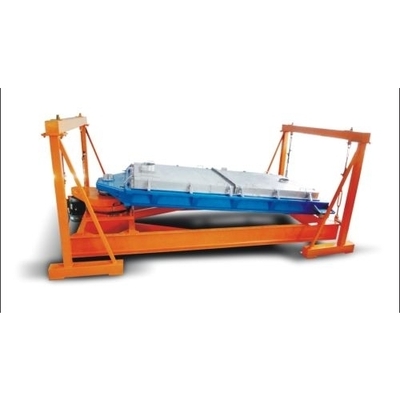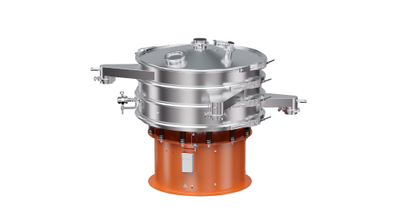

As 3D printing technology sweeps across the global manufacturing industry with its core advantages of “digitalization + personalization,” the industrial scale is showing exponential growth. However, the issue of “high consumption and high waste” of metal powder has become a key bottleneck restricting the industry’s further development. Navector (Shanghai) Screening Technology Co., Ltd., with 20 years of experience in precision screening, has launched the NMS Series 3D Printing Additive Recycling System. Through technological innovation, it directly addresses the industry’s pain points and injects core momentum into the large-scale and green development of 3D printing.
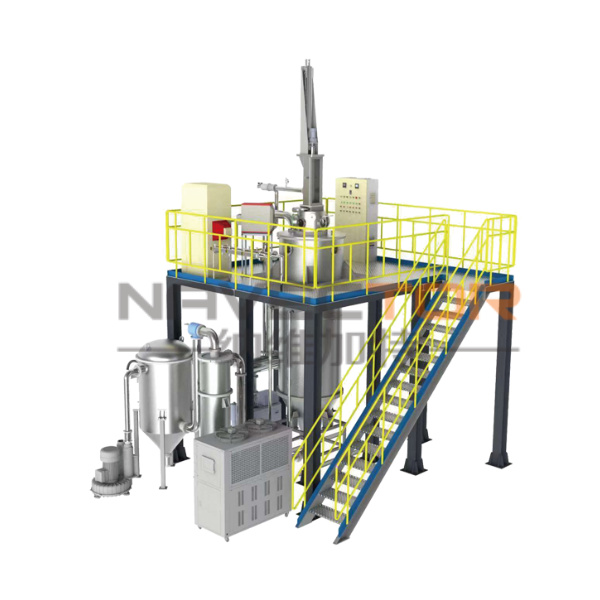
Navector subsidiary Sunway vacuum induction gas atomization powder production equipment (EIGA)
I. The Golden Era of 3D Printing: From Laboratory to Mass Production
In recent years, 3D printing technology has evolved from an experimental concept into a key tool in modern manufacturing. Based on the principle of layer-by-layer material accumulation, this technology enables efficient forming of complex structural parts, significantly improving production flexibility and design freedom.
Over the past few years, 3D printing has not only been widely used in prototype development but has also expanded to mass production and personalized customization. It has become an indispensable advanced manufacturing tool in industries such as aerospace, automotive, and medical equipment.
With continuous technological progress, the range of 3D printing materials has also become increasingly diverse. From plastics and metals to ceramics and composites, almost all types of materials are now applicable for 3D printing. At the same time, its application scenarios have greatly expanded—no longer limited to prototype manufacturing, but now extending to the production of functional components and even direct manufacturing of end-use products.
3D printing technology is profoundly transforming traditional production models. It not only improves production efficiency but also strongly promotes the development of customized and personalized manufacturing. It can be said that this technology has become one of the key drivers of modern manufacturing transformation and upgrading.
II. Challenges Faced by the 3D Printing Industry
Despite the rapid development of additive manufacturing technology, its widespread adoption and large-scale application are still constrained by several challenges, particularly in material utilization and recycling technology.
1. Material Waste and Cost Pressure
During the 3D printing process, material utilization efficiency remains to be improved, especially in high-end materials such as metal and ceramic powders. Although the process uses additive manufacturing, each printing cycle still generates unused waste materials. For high-value metal powders, this waste not only significantly increases production costs but also poses challenges to sustainable resource utilization.
2. Technical Barriers in Powder Recovery and Reuse
Powder recovery is a key step in the 3D printing process, yet its reuse still faces multiple technical barriers.
- Powder contamination and performance degradation: With increased recycling cycles, the particle morphology and physical properties of powders gradually change, leading to decreased quality stability. For example, metal powders may experience oxidation, fracture, or particle refinement after multiple uses, affecting part strength, accuracy, and surface finish. This issue is especially critical in industries such as aerospace and medical devices, where even minor fluctuations in powder quality directly threaten product reliability and safety.
- Material loss during recovery: Current recovery technologies cannot achieve complete powder recycling, as some fine powders are irreversibly lost during screening and processing. Additionally, recycled powders must undergo strict cleaning and sieving to remove impurities, ensuring that reuse does not compromise print quality.
3. Environmental Regulations and Waste Management Challenges
With increasingly stringent global environmental regulations, manufacturers face higher demands in waste management and resource recycling. Although 3D printing offers advantages such as reduced tooling wear and lower material consumption, its shortcomings in material waste and waste treatment cannot be ignored. Systematic technological and managerial measures are urgently needed to address these challenges.
4. Challenges in Scaling Up and Production Efficiency
While 3D printing excels in prototyping and custom manufacturing, it still faces efficiency and cost constraints in mass production.
- Production efficiency requires improvement: Compared to traditional mass-production methods, the overall speed of 3D printing remains relatively low. For parts with complex structures, time costs are especially high. Although progress has been made in print speed, balancing speed, cost, and quality for large-scale production remains a challenge.
- Equipment and material compatibility issues: Compatibility between 3D printing equipment and various materials is still limited. Different printing technologies—such as Fused Deposition Modeling (FDM), Selective Laser Sintering (SLS), and Stereolithography (SLA)—impose specific material requirements, presenting high technical barriers for companies in equipment and material selection. Moreover, high-end materials like titanium and aluminum alloy powders remain expensive and subject to market fluctuations, further restricting large-scale economic feasibility.
5. Lack of Standardization and Industry Norms
As 3D printing continues to evolve, the development of related industry standards and regulatory systems remains lagging. The absence of unified technical standards leads to inconsistencies across companies and regions, creating compatibility issues among materials, equipment, and processes.Most 3D printing companies have yet to establish systematic quality control mechanisms. Although some leading enterprises have begun building internal quality management frameworks, the industry still lacks recognized international standards. Consequently, small and medium-sized enterprises face higher technical and compliance barriers when entering the market.
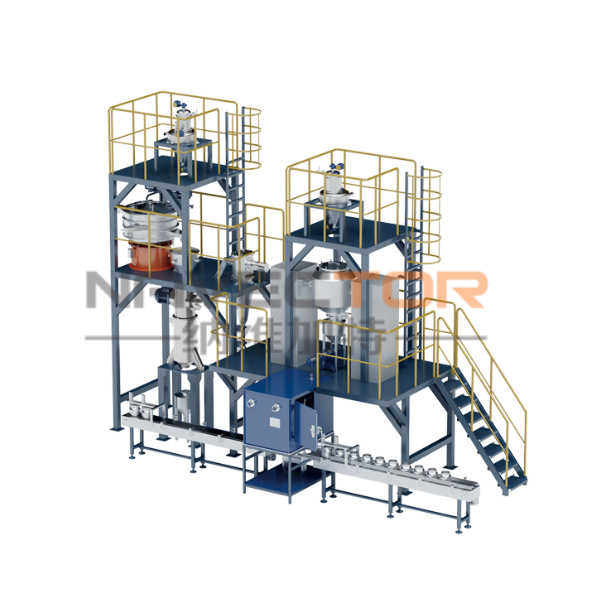
Navector subsidiary Sunway multifunctional powder post-processing automatic production line
III. Advantages of Navector’s NMS Series 3D Printing Additive Recycling System
To address these industry challenges, Navector (Shanghai) Screening Technology Co., Ltd. developed the NMS Series 3D Printing Additive Recycling System—specifically designed to solve problems of material waste, powder recovery, and reuse. It offers the following significant advantages:
- High-efficiency material recovery
The NMS Series adopts advanced screening technology to finely separate and recover residual powder during the printing process, maximizing material utilization, minimizing waste, and reducing production costs.
- Guaranteed powder quality
The system effectively removes impurities, ensuring that recovered powder maintains high performance. Precise sieving and cleaning prevent performance degradation caused by oxidation or morphological changes, ensuring consistent powder quality in every reuse cycle.
- Intelligent and automated operation
Equipped with a fully automated control system, the NMS Series minimizes manual intervention, enhances operational efficiency, and reduces safety risks. Once parameters are set, the system automatically completes powder recovery, screening, and reuse—greatly simplifying the process.
- Flexible industry adaptability
Designed for different materials, the NMS Series offers customizable recovery and reuse solutions. Whether dealing with metal, plastic, or composite powders, the system can be optimized for specific production requirements across industries.
- Enabling green manufacturing
Beyond improving material recycling efficiency, the NMS Series helps enterprises achieve environmentally friendly production. By reducing waste generation and conserving resources, it supports sustainable manufacturing in line with global trends toward green transformation.
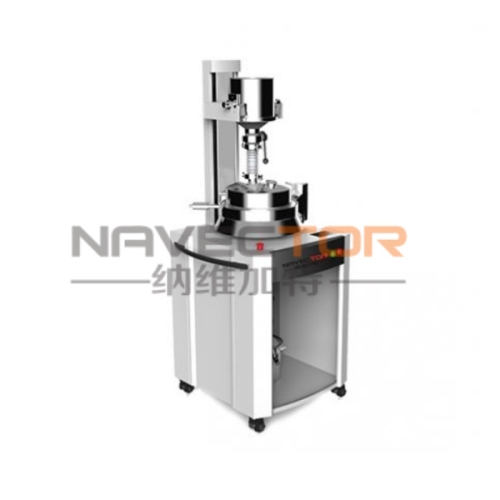
As additive manufacturing enters a new stage of large-scale, functional, and customized development, material recovery and recycling have become key factors for enhancing competitiveness and achieving green transformation. Navector’s NMS Series 3D Printing Additive Recycling System aligns closely with industry trends, focusing on core challenges and providing systematic technical solutions to promote efficient and sustainable growth.
In response to modern manufacturing’s demand for “less material input, higher resource utilization, stronger production efficiency, and lower environmental impact,” the NMS Series represents not just a piece of equipment, but an upgraded manufacturing philosophy. It serves as a foundation for the future of sustainable manufacturing. Navector looks forward to working hand in hand with industry partners to advance the integration of green and intelligent manufacturing into a new era.